+1-236-234-3341 Mon–Sat, 8:00 a.m.–7:00 p.m. Vancouver time Call me back

Dmytro KhozinInvestment specialist

Investing and passive income in Canada

  • New to investing? Let’s go over your first steps.
  • Already investing? Let’s look at your portfolio, its costs and when you can take your money out.

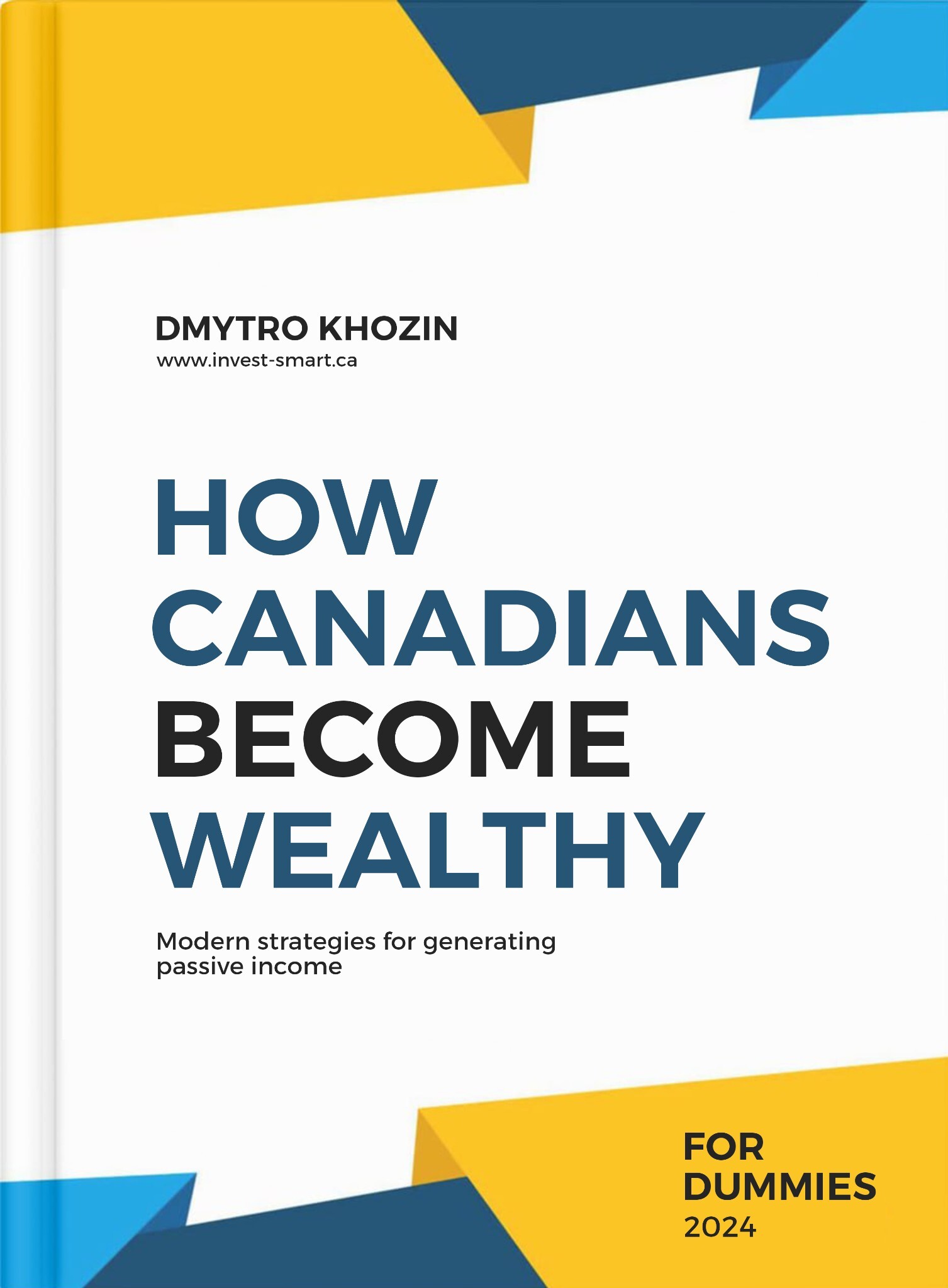
Free book

How to build wealth, reduce taxes and create passive income in Canada, with practical examples.

2,000+ downloads

Get the book (PDF / EPUB) Collapse form

We use your email to send the book link. You can sign up for follow-up emails separately. Form privacy

How Canadians Become Rich, by Dmytro Khozin

Investment calculators

Choose what to calculate. Change the numbers to see the results.

Capital growth

See how an initial investment and regular contributions can grow over time.

Projected capital— Total contributed— Gain or loss—

Capital by year CAD

In today’s dollars

Projected capital adjusted for the inflation rate you entered.

—
How the calculator applies rates and contributions

The default effective annual rate reflects a full year of growth. If you select a nominal rate, the calculator first accounts for how often it compounds. It then converts the effective annual rate to an equivalent monthly rate for the full balance. Contributions are added at the end of each month.

The starting values are examples. Results are projections and losses are possible. The calculation excludes taxes and fees. Inflation only affects the value shown in today’s dollars.

Projection report

Create a report using the figures above. It includes your inputs, total contributions and projected capital.

How Waverley works with investors

Waverley is a Canadian Exempt Market Dealer.

Investing alongside clientsWaverley says its team invests its own money in investments it offers clients.
OnlineConsultations and initial paperwork are handled remotely.
FeesClients do not pay Waverley directly. Issuers compensate Waverley. Investment costs are listed in the offering documents.

Investment options

Explore investments for your goals

Each investment has its own terms, timeline and risks. We can go over them together.

FSI Financial building
MORTGAGE FUNDS

Income from mortgage investments

Invest in a portfolio of mortgage loans through a Mortgage Investment Corporation.

How mortgage funds work →
Investment real estate
REAL ESTATE

Real estate funds and REITs

Invest in real estate through funds and potentially earn income from their operations.

How real estate funds work →
Financial planning
DEVELOPMENT

Real estate development projects

Long-term construction and property development projects for investors whose goals fit the timeline.

How development projects work →
Rock core samples at a mineral exploration site

TerraFunds: investing with tax deductions

For investors who pay a high rate of income tax. The fund invests in shares of Canadian companies that finance exploration for gold and critical minerals.

  • Tax deductions and credits. Eligible exploration expenses may reduce taxable income.
  • Diversification. Investments are spread across companies in the resource sector.

The tax impact varies by province.

Discuss the tax impact and risks

Client cases

Passive income · TFSAAlex and his TFSA. Capital growth and payouts

Alex considered investing CAD 20,000 in a real estate fund through his TFSA. Before buying, he would need to check his available contribution room and confirm that the investment is eligible for the account. CRA rules for TFSAs

Starting with CAD 20,000 and adding CAD 7,000 at the end of each year, an assumed annual return of 5% with reinvestment would bring the projected balance to about CAD 64,205 after 5 years and CAD 284,528 after 20 years. The calculation uses the contribution shown in the example and assumes enough personal TFSA contribution room. It excludes fees and inflation.

Cash payouts are calculated separately. At an assumed 4% payout rate, CAD 20,000 would generate CAD 800 a year. Actual payout amounts and timing depend on the fund’s terms. The investment may lose value.

First home · FHSAHow Sergey earns 40%+ a year while saving for a home

Sergey wants to buy a home and reduce his tax bill. He opened a First Home Savings Account (FHSA) and contributes CAD 8,000 a year.

📌 What does that give him?

  • ✔️ A CAD 8,000 deduction from taxable income, reducing his tax bill by CAD 3,200 (at a 40% tax rate).
  • ✔️ An 11% target fixed annual return on the investment.

That adds up to a 51% annual return, and the approach is fully legal. No bank savings program offers this strategy.

💡 Want to make the most of your savings for a first home? Book a consultation.

Retirement · RRSPTatiana and her RRSP. What CAD 500 a month adds up to

Tatiana wants to supplement her retirement income by putting CAD 500 a monthinto her RRSP. Over 30 years, she’ll contribute CAD 180,000. At an assumed effective annual return of 5% with month-end contributions, her projected balance would be about CAD 407,688 before fees, inflation and taxes on withdrawals.

How the contributions are funded and their tax effect are calculated separately. For example, a fully eligible CAD 1,000 deduction at an assumed 40% marginal rate could reduce tax by about CAD 400. The refund depends on the full tax return. RRSP withdrawals are generally taxable. How the CRA treats RRSP withdrawals

Taxes and investingAndriy and flow-through shares. Tax effects and investment risk

Andriy works in IT and is considering flow-through shares. Under this kind of offering, the issuing company may pass certain eligible expenses on to the investor to claim. The tax effect depends on the type and amount of the expenses and the investor’s circumstances. CRA reporting rules for investors

If the model applies a CAD 100 deduction for every CAD 100 invested and the entire deduction offsets income in a 53% marginal tax bracket, the estimated tax reduction would be CAD 53. The full calculation also needs the sale price, fees and tax on the sale. These shares generally have a tax cost of zero and may lose value. Department of Finance Canada overview of the tax treatment

The cases illustrate calculations, projections and tax effects under the stated assumptions. Actual results depend on individual circumstances.

Dmytro Khozin

Let’s discuss your investment goals

Dmytro Khozin · Dealing Representative at Waverley

In 30 minutes, we’ll discuss your timeline, investment options, fees, risks and when you can access your money.

British Columbia, Alberta, Ontario and Nova Scotia. Waverley profile · Check registration

Book online

Investor testimonials

Our approach

Why investors choose Waverley

Canadian experience

We discuss your goals in the context of the investment options available in Canada.

Fund analysis

We review the structure, documents and risks of the options available to you.

Diversification

We look at how different investments can fit together in a portfolio.

Ongoing guidance

We help you understand the terms and documents at each step.

How we work

From your first question to investing

01

Get in touch

Reach us through the website or by phone.

02

Consultation

We’ll discuss your experience, goals and timeline.

03

Explore options

We’ll look at the options that fit your goals.

04

Paperwork

We’ll go through the terms and paperwork.

05

Invest

You decide after reviewing the terms.

06

Support

We stay in touch after you invest.

Frequently asked questions

I’ve never invested before. Is it safe?

Investing can lead to losses. In our first meeting, we’ll discuss your goal, timeline and when you might need the money. Then we’ll review how to read the terms, which risks to compare and how to check when you can access your funds.

How do you manage risk?

We compare the risks disclosed in fund documents, investment structure, concentration and exit terms. Spreading money across different assets can reduce exposure to a single holding. Losses remain possible.

What happens if the market falls? Could I lose money?

If market conditions deteriorate, a fund’s value and payouts may fall. Private funds are generally valued less often than listed funds, so a decline may take longer to appear in reports. You could lose some or all of your investment. Private-market risks

What’s the minimum amount to get started?

The minimum depends on the fund, the class of securities and the offering terms. Check the documents for the specific offering for the current minimum.

How long do I need to invest? Can I take my money out early?

Before investing, check the term, how to request a redemption, the fees and whether the fund can suspend redemptions. Some private investments are difficult to sell and may have no early exit. How to check liquidity

When could I start earning income? How often are payouts made?

The schedule depends on the fund. Payouts may be monthly, quarterly or at the end of a project. Check the documents for the source of payouts, payment dates and when payouts can be changed or suspended.

How is the return calculated? Is it fixed or can it change?

Total return reflects changes in investment value plus payouts, after costs. If the documents state a target rate, the actual return could be higher or lower. Check the period, currency and which fees are included. How payouts differ from total return

How do taxes differ for a TFSA, RRSP and FHSA?

TFSA contributions generally come from after-tax money. Investment income and withdrawals are generally tax-free in Canada. Eligible RRSP contributions may be deductible, while withdrawals are generally taxable. Eligible FHSA contributions may also be deductible, and qualifying withdrawals for a first home are tax-free. Compare the three accounts

How do I compare an investment with a bank deposit?

Compare the outcome after costs, the term, access to your money before maturity and how much you could lose. CDIC covers eligible deposits at its member institutions up to established limits. Funds and shares are outside that coverage. What CDIC covers

How do private investments differ from exchange-listed investments?

An exchange-listed security usually has a public price and a market where you can sell it. With a private investment, it’s often harder to find a current valuation or a buyer. Fund structure, fees, the term and redemption rules all affect the outcome. Compare real estate investments

What are the investor requirements? Who can invest in Canada?

Requirements depend on the province, account type and specific offering terms. Some private offerings consider income or assets, or set investment limits. Check the offering documents before investing. Private-market eligibility requirements

How can I book a consultation?

Choose a time for a free 30-minute online meeting in the consultation section. If you’ve run a calculation or have questions about your portfolio, bring them to the meeting. Go to consultations

Let’s get in touch

Let’s talk about your investment goals

Send a question or let us know if you’d prefer to discuss it by phone.

+1-236-234-3341

Dmytro Khozin · Waverley

We use your email to reply. If you’d like a callback, enter your phone number. Form privacy